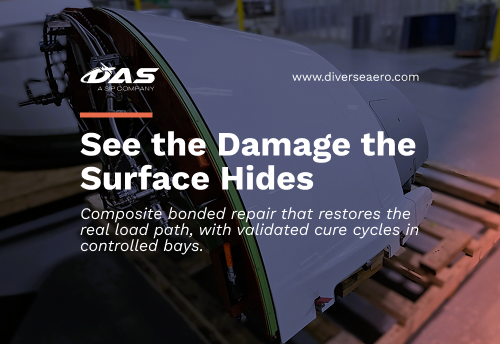
Ask most operators where their timeline actually gets stuck, and the answer is rarely the repair itself — it is the wait. In recent years, the industry has felt sustained pressure on supply chains and repair capacity, and mature fleets flying longer than planned have only added to the demand for parts and structural work. When the manufacturer’s own channel is stretched, an aircraft can sit while a component or a repair slot moves slowly through a queue. That pressure is why a growing number of operators are looking beyond the single OEM route and asking a practical question: is there an approved alternative that can move faster?
The bottleneck is rarely one thing. Several forces tend to line up at once:
None of this means the OEM path is wrong. It means it is not always the fastest — and for a grounded aircraft, time is the expensive part.
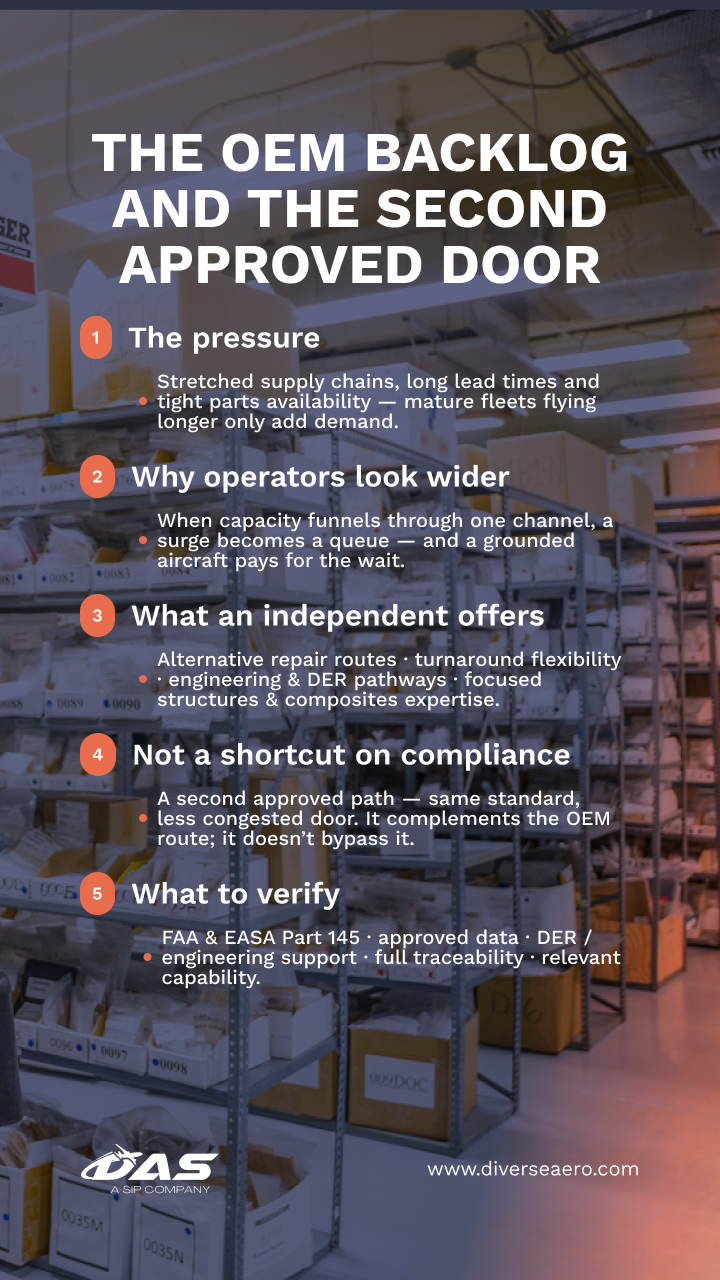
An independent repair station is not a shortcut around compliance; it is a second approved path to the same standard. A capable, engineering-backed station can add real options when the primary channel is congested:
Used well, an independent doesn’t replace the OEM relationship — it gives the operator a way to keep an aircraft moving when the primary route can’t.
Speed only helps if it is properly certified. Before routing structural work to an independent, confirm the fundamentals:
An independent that clears those checks isn’t a compromise on the OEM standard — it is the same standard, delivered through a less congested door.
DAS (Diverse Aircraft Services) is an independent, FAA & EASA Part 145 repair station in Miami, specialized in aircraft structures and composites and backed by in-house engineering and DER-based repair support. That combination — focused structural capability, approved-data discipline and an alternative, well-documented repair path — is exactly what operators are looking for when the primary channel is backed up. When a queue is holding an aircraft on the ground, a second approved route is not a luxury; it is uptime.
Backlogs are a capacity problem, not a compliance problem — and the answer is another compliant path, not a lower bar. An engineering-backed, Part 145 independent gives operators optionality on turnaround without giving up traceability or approved data. When the wait is the cost, having a second door matters.
Waiting on a structural component or a congested repair queue? Send DAS the details and we’ll help you evaluate an approved, faster path
Wondering how an independent stays fully compliant while offering that alternative path? See our guide: “DER vs OEM: How a Designated Engineering Representative Keeps You Compliant and On-Schedule.”
When the manufacturer's own channel is stretched, an aircraft can sit while a component or repair slot moves slowly through a queue. A growing number of operators look beyond the single OEM route and ask whether there is an approved alternative that can move faster. An independent is not a shortcut around compliance; it is a second approved path to the same standard.
The bottleneck is rarely one thing. Lead times on new parts and manufacturer repair slots can stretch well beyond operational need, serviceable units may not be on the shelf, aging fleets generate more structural and composite work precisely as capacity is tight, and concentrated capacity means any surge through a single channel becomes a backlog for everyone in line. For a grounded aircraft, time is the expensive part.
A capable, engineering-backed station can add real options when the primary channel is congested: alternative repair routes that may return a component to service instead of waiting for a new unit, a shorter and more predictable timeline, DER and engineering capability for cases standard data does not cover, and focused expertise in structures and composites. Used well, an independent does not replace the OEM relationship; it gives the operator a way to keep an aircraft moving.
Speed only helps if it is properly certified. Confirm current FAA and EASA Part 145 approvals for the work in question, that the repair is backed by applicable approved data rather than improvised, DER and engineering support to substantiate a repair where standard data stops short, complete audit-ready traceability, and demonstrated capability in the specific structures or composites at hand. An independent that clears those checks is the same standard delivered through a less congested door.
No. Backlogs are a capacity problem, not a compliance problem, and the answer is another compliant path, not a lower bar. An engineering-backed, Part 145 independent gives optionality on turnaround without giving up traceability or approved data. DAS is an independent, FAA and EASA Part 145 repair station in Miami, specialized in aircraft structures and composites and backed by in-house engineering and DER-based repair support.